How to Sleep During the Day After a Night Shift (Without Fighting Your Own Body)
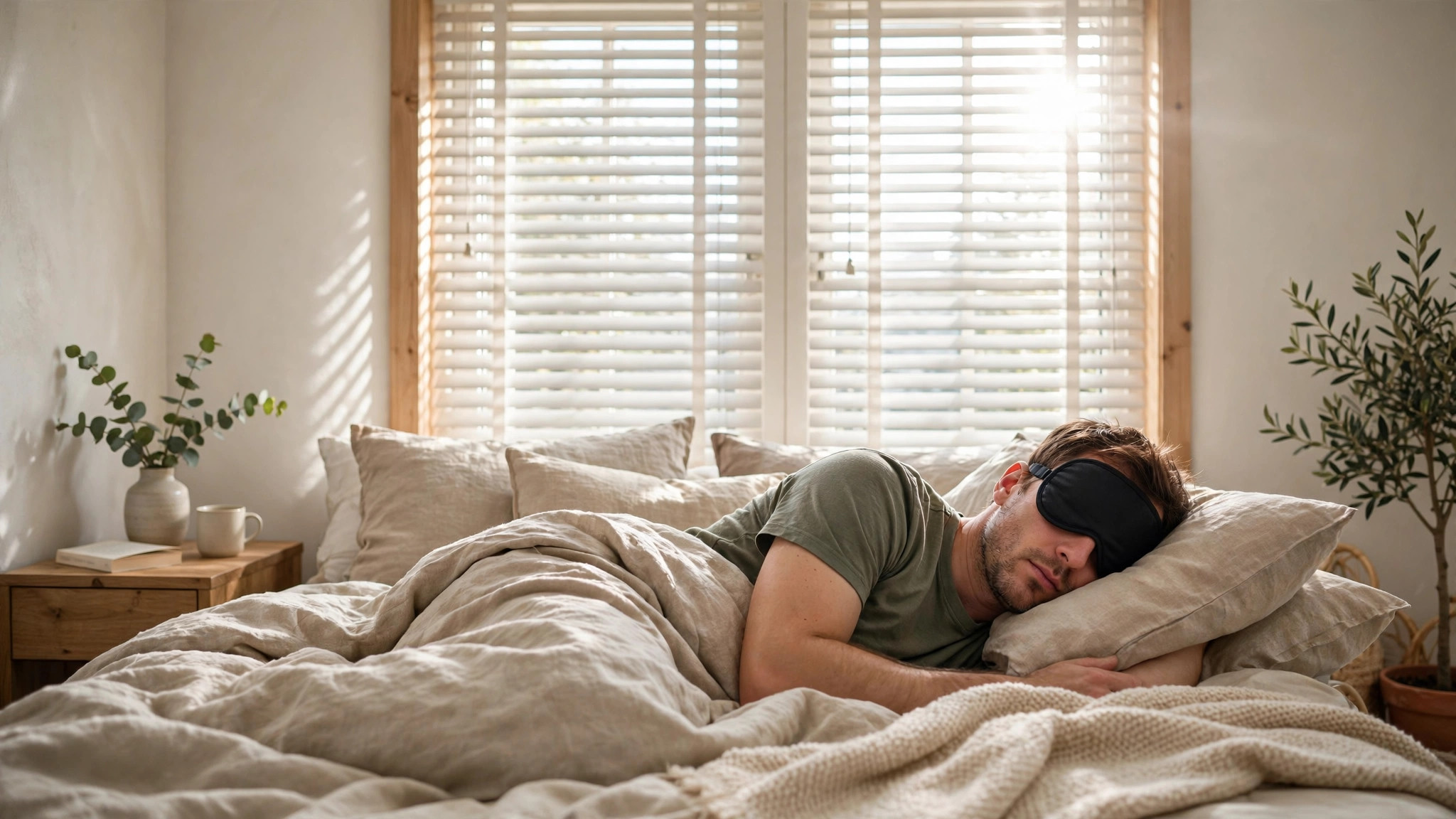
You finish your shift at 7 a.m., drive home in full daylight, and then lie in bed at 8:30 listening to the neighbor’s lawn mower like it’s a personal insult. Sound familiar? We’ve talked to hundreds of night shift workers over the years — nurses, warehouse crews, security guards, bakers — and the ones who sleep well during the day almost never describe themselves as “good sleepers.” They describe a routine. Day sleep isn’t a talent. It’s a setup.
Here’s the full setup, in the order your day actually happens.
Your sleep starts on the drive home
Most people think sleep prep begins at the front door. It doesn’t. It begins in the parking lot.
Morning sunlight is the single strongest signal telling your brain “stay awake.” One bright commute can undo a whole shift’s worth of tiredness, because light hitting your eyes suppresses melatonin and sets your body clock to daytime mode. So put on sunglasses before you leave the building — wraparound ones if you have them, the darker the better. We’ve seen workers dismiss this as a gimmick and then wonder why they’re wired at 9 a.m. It takes ten seconds. Do it anyway.
Two more commute rules we stand by:
- No “quick errands.” The grocery run, the bank, the oil change — every stop adds light, noise, and mental chatter. Run errands on the way to your shift, not after it.
- Kill the news and talk radio if they rile you up. A heated call-in show is caffeine for your brain. Music or a calm podcast gets you home in a lower gear.
And a safety note that matters more than any tip in this article: if you’re nodding off behind the wheel, pull over. A 20-minute nap in a lit parking lot beats the alternative every time.
The first hour home: wind down like you mean it
Day sleepers who crash straight from the door to the pillow usually sleep badly, and we’ve watched this pattern repeat for years. Your body needs a landing strip. Give it 30 to 60 minutes of deliberate downshifting — the same way day workers don’t fall asleep the second they walk in from the office.
A wind-down that works looks something like this:
- Eat something small and warm. A real meal is fine, but skip the giant spicy feast; heartburn at noon will wake you. Think eggs, soup, oatmeal — not a drive-thru bag eaten over the sink.
- Shower. Warm, not hot. The drop in body temperature afterward nudges you toward sleep.
- Change out of work clothes. It sounds trivial. It isn’t. Your brain files “uniform” under on duty.
- Dim the house. Close blinds as you move through rooms. By the time you reach the bedroom, you should be living in twilight.
- Write tomorrow’s worries down. A notepad by the bed. The 11 a.m. brain-spin about bills and appointments is just your mind refusing to clock out — give it somewhere to put things.
One honest caveat: none of this works instantly. The first week, you’ll do the whole routine and still lie there annoyed. That’s normal. The routine is a signal you’re sending your body clock, and clocks take days, not hours, to move.
Build a bedroom your body can’t argue with
This is where most day sleepers underinvest, and it’s the highest-leverage fix on this page.
Light first. Your bedroom at 10 a.m. should look like midnight. We’ve tested bedrooms with a light-meter app and found “dark” curtains letting in enough light to read by — that’s not dark, that’s mood lighting. You want true blackout: floor-to-ceiling panels with no glowing edges, or blackout fabric plus a sleep mask as backup. If you’re shopping, our guide to the best blackout curtains for night shift workers breaks down what actually blocks light versus what just looks dark in the store. Tape over LED standby lights. Put a towel under the door if the hallway leaks light.
Temperature second. Aim for 65–68°F. Your core temperature has to drop for deep sleep, and a cool room does half that work for you. Most day sleepers we talk to keep the room too warm, then blame “daytime noise” for sleep that was actually broken by heat.
Sound third. You can’t silence the world at noon, so mask it instead. A white noise machine or a fan on a steady setting covers the doorbell, the dog, and the delivery truck far better than earplugs alone — and unlike earplugs, it won’t leave you sleeping through your alarm. Keep the sound constant; a TV that swells and fades with dialogue will wake you in waves.
The door, the phone, and the people who love you
Here’s the uncomfortable truth we’ve learned from readers: the biggest threat to day sleep isn’t light or noise. It’s people who don’t believe you’re really sleeping.
Set the boundaries once, clearly, and enforce them kindly:
- A sign on the bedroom door — “Day sleeper. Please don’t knock unless it’s an emergency.” Cheerful works better than threatening.
- Delivery instructions on every account: “Do not ring bell. Leave package at side door.” Most apps let you save this permanently.
- Phone on Do Not Disturb with only two or three people allowed through — the school, your partner, your supervisor. Everyone else gets a text back at 4 p.m.
- A family meeting, once. Explain your sleep hours the way you’d explain a work meeting: 8:30 to 4:30 is not “a nap,” it’s your night. Kids especially do better with a clock on the fridge showing when you’re “at work sleeping.”
The workers who skip this step end up resentful, and the ones who do it report something surprising: families adjust within a week or two. People aren’t being rude. They just can’t see an invisible boundary.
Caffeine has a curfew, and it’s earlier than you think
Caffeine’s half-life is roughly 5 to 6 hours, which means half of that 2 a.m. energy drink is still in your system at 8 a.m. when you’re trying to fall asleep. We’ve seen night shifters swear caffeine “doesn’t affect them” while their sleep tracker shows them getting 90 minutes less deep sleep than their coworkers. They fall asleep fine. They just sleep shallow.
Our rule: last caffeine at least 5–6 hours before your planned sleep time. Sleeping at 8:30 a.m.? Your cutoff is 2–2:30 a.m. Front-load your caffeine in the first half of the shift — a coffee at 7 p.m. and another around 11 p.m. does the job — then switch to water, herbal tea, or decaf for the back half. And no, a big coffee “to get through the drive home” is not the exception. That’s the exact habit keeping you awake at 10 a.m.
One wake time, even on your days off
Everything above gets easier if your body knows when sleep happens — and harder every time you move it. Pick a wake time (4 p.m. works well for a 7-to-7 schedule) and hold it within about an hour, seven days a week. Sleeping until noon on your days off because you “finally can” feels like a reward. It functions like jet lag you gave yourself, twice a week, forever.
There’s a related question we get constantly — should you sleep the moment you get home, or stay up a few hours and sleep closer to your shift? Both can work, and the right answer depends on your family life and commute. We’ve laid out the trade-offs in sleep right after your night shift or stay up: which works better? — pick one pattern and commit for at least two weeks before judging it.
Day sleep will never feel quite as automatic as night sleep does for day workers. But “not automatic” is very different from “impossible.” Control the light, cool the room, guard the door, cut the caffeine early, and keep the wake time boring and predictable. Do those five things for two straight weeks and most people we’ve worked with are sleeping longer and waking up clearer — not because they got better at sleeping, but because they finally stopped fighting their own setup.
This article is general wellness information, not medical advice. If you snore heavily, stop breathing in your sleep, or stay exhausted despite solid sleep habits, talk to a doctor — sleep disorders like sleep apnea are common in shift workers and need proper diagnosis and treatment.