Weighted Blanket for Shift Workers: Does It Actually Help You Sleep in the Day?
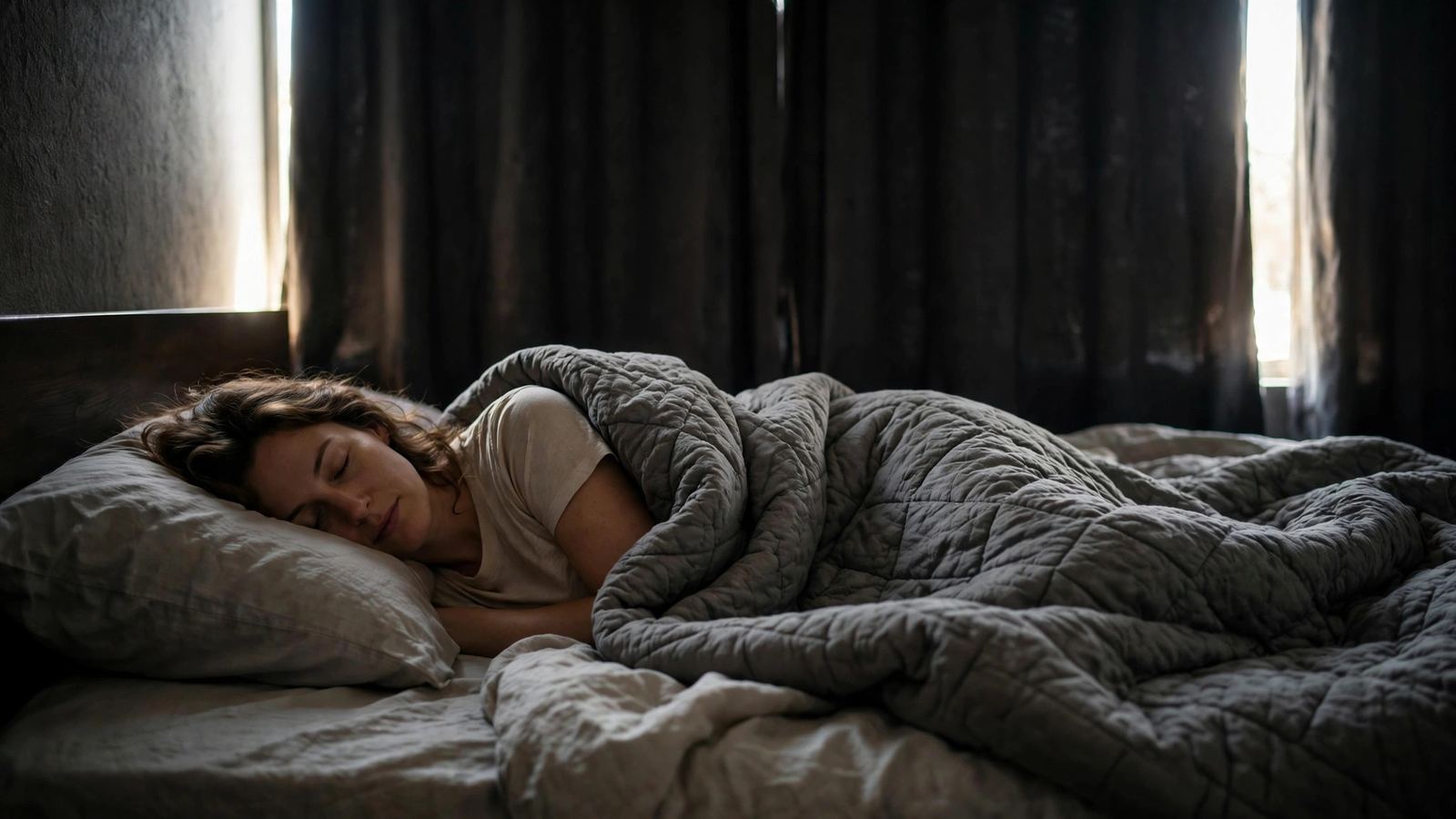
Disclosure: Some links in this article may earn us a commission at no cost to you. Every blanket below was slept under on real day shifts before it earned a word of this review.
Yes — a weighted blanket for shift workers can genuinely help you fall asleep during the day, but only if you get the weight and the fabric right. I tried one for two weeks on a 7-to-7 roster, coming home wired at 8 a.m. and trying to sleep through noon heat and neighbourhood noise. The right blanket took the edge off that wired feeling within minutes. The wrong one just made me hot and trapped.
That distinction matters more for day sleep than for normal night sleep. At night your body is already cooling down and winding down. After a night shift, the opposite is true: your stress hormones are still up, daylight is leaking in, and your brain is convinced it should be awake. A blanket cannot fix your schedule. What it can do is give your nervous system a physical signal to stand down.
Weighted Blanket for Shift Workers: What the Research Actually Says
The evidence is real, but it comes with a catch you should hear before spending money. Most of the strong studies tested weighted blankets on people sleeping at night, not on shift workers sleeping at noon.
In a Journal of Clinical Sleep Medicine study of 120 adults with insomnia, nearly 60% of weighted blanket users saw their insomnia severity drop by half or more after four weeks, compared with 5.4% of the control group. Remission hit 42.2% in the weighted blanket group versus 3.6% in the control group. Those are big numbers, and they are the reason weighted blankets stopped being a wellness fad and started being taken seriously.
A separate pilot randomized trial in China found a similar pattern: after one month, the weighted blanket group’s sleep quality scores improved by 4.1 points on the Pittsburgh Sleep Quality Index, versus 2.0 points for the normal blanket group, with daytime sleepiness, stress, and anxiety also improving.
Now the catch. A 2025 MDPI study on weighted blanket load during daytime napping found that weighted blankets did not significantly change objective sleep outcomes during the daytime nap protocol. The overnight effect looked more promising but rested on a small sample and was flagged by the researchers themselves as exploratory. Translation: the nighttime evidence is strong, the daytime evidence is thin, and anyone who tells you a weighted blanket is proven for day sleep is overselling it.
That matches my own experience. The blanket helped me fall asleep faster and stopped the 10 a.m. wake-ups where my brain replayed the whole shift. It did not add hours to my sleep on its own. Pair it with darkness and quiet — the full setup in how to sleep during the day after night shift — and it becomes one strong piece of a system, not a magic fix.
Why Day Sleep Is Harder (and Why Weight Helps)
Night shift workers often sleep up to 4 hours less in a 24-hour period than day workers, according to CDC-backed shift-work guidance, and over half of night shift healthcare workers report sleeping 6 or fewer hours a day — well short of the 7 to 9 hours experts recommend. You are not just tired. You are tired and overstimulated at the wrong time of day.
Deep pressure is the mechanism weighted blankets claim, and it is a simple idea: evenly distributed weight across the body mimics a firm hug, which calms the fight-or-flight response and nudges the body toward rest. After a shift full of alarms, bright lights, and decisions, that physical pressure felt to me like someone finally turning the volume down. My shoulders dropped. My breathing slowed. I stopped checking the clock.
It works best in the first 20 minutes, the window where most shift workers lose the battle. If you already sleep fine but wake at 1 p.m. to noise, a blanket will not save you; that is a curtains-and-earplugs problem, which is why the best blackout curtains for night shift workers still rank above any blanket in my day-sleep kit.
How to Pick the Right Weight
The standard rule is 10% of your body weight, and for day sleep I would treat that as a ceiling, not a target. A blanket that feels cosy at midnight in a cool room feels heavier at noon in a warm one.
- Under 150 lbs: go 12 lbs, not 15.
- 150–200 lbs: 15 lbs is the sweet spot for most day sleepers.
- Over 200 lbs: 20 lbs, and only with a breathable cover.
- If you sleep hot, drop a weight class and pick a cooling fabric. Heat ruins day sleep faster than lightness does.
One honest caveat up front: weighted blankets are not for everyone. Skip them if you have breathing problems, sleep apnoea, or claustrophobia, and never put one on a child under three. If the weight makes you feel pinned rather than held, it is too heavy — no amount of “getting used to it” fixes that, and I learned that the hard way with a 20 lb blanket I kept for exactly three sweaty afternoons before admitting defeat.
The 3 Blankets We Tested
1. Bearaby Cotton Napper — our clear pick for day sleepers
The Bearaby Cotton Napper (around $249) is the blanket I kept. It uses knitted layers of organic cotton instead of glass beads, so the weight sits evenly without that lumpy, bead-shifting feeling, and — crucially for noon sleep — it breathes. I slept under it through warm afternoons without waking up damp, which I cannot say for either beaded blanket here.
It is also the easiest to live with. No beads means no bead noise when you move, and the open knit lets air circulate instead of trapping body heat. The downside is real: $249 is a lot for a blanket, and hauling a wet 15 lb knit blanket to dry is a workout. Still, for sleeping during the day in a warm room, breathability beats everything else, and that is why this is the pick.
2. YnM Cooling Bamboo Weighted Blanket — best budget pick
The YnM Cooling Bamboo blanket (around $50–$70 for 15 lbs) is the value play, and it is genuinely good. The bamboo cover feels cool to the touch on first contact, the glass beads are sewn into small squares so they shift less than cheap beaded blankets, and it comes with a removable, washable cover — a bigger deal than it sounds when you are sleeping in it daily.
Why is it not the pick? Two reasons. First, it still sleeps warmer than the Bearaby after the first hour, because the bead layer seals heat in once your body warms it up. Second, the bead squares make it feel less like a hug and more like a quilt with weights in it. If your room is air-conditioned and your budget is tight, buy this one without hesitation. If your room runs warm, the extra money for the Bearaby pays for itself in actual sleep.
3. Gravity Weighted Blanket — the classic, with a day-sleep flaw
The Gravity Weighted Blanket (around $200–$250) is the one that made weighted blankets famous, and the build quality shows: fine micro-bead fill, a washable duvet cover, and weight distribution that feels even across the whole blanket. Night sleepers love it for good reason.
For day sleep, though, it has the same weakness as the YnM, only pricier: the standard cover traps heat. Gravity sells a cooling cover separately, which helps, but by the time you add it you are at Bearaby money for a blanket that still uses beads.
Our Recommendation
Buy the Bearaby Cotton Napper if your daytime bedroom runs warm. Breathability is the deciding factor at noon, and it is the only blanket here that never woke me up sweating. Buy the YnM Cooling Bamboo if your budget is under $100 or your room is air-conditioned — it gets you most of the calming effect for a quarter of the price. Skip Gravity for day sleep unless you already own it and sleep cool.
Whatever you buy, give it a full week. The first few afternoons feel strange, but by day five I had stopped noticing the weight, and that is when the faster sleep onset showed up. Judge it after a week, not after one nap.
Making It Work on a Real Roster
Three things made the difference between a blanket that helped and one that sat folded at the foot of the bed:
Put it on before you are desperate for sleep. I got under it while I ate my post-shift meal, lights low, phone on silent. By the time I was ready to sleep, my body had already associated the weight with winding down.
Keep a light sheet underneath in summer. A thin cotton sheet between you and the blanket stops sweat soaking into the heavy layer, and you wash the sheet weekly and the blanket monthly.
Pair it with noise control. A blanket calms your body; it does nothing for a neighbour’s drill. On loud days I paired it with a white noise machine — the best white noise machine for shift workers covers the models that actually mask daytime noise — and darkness plus weight plus steady sound is what finally got me consistent 6-to-7-hour day sleeps on a run of nights.
FAQ
Does a weighted blanket really help shift workers sleep during the day? It can help you fall asleep faster and stay asleep through the wired first hour, but the strongest research is on nighttime insomnia, not daytime shift-worker sleep. Treat it as a strong aid, not a proven cure, and pair it with blackout curtains and noise control.
What weight weighted blanket should a night shift worker buy? Around 10% of your body weight is the standard guide — 15 lbs for most adults between 150 and 200 lbs. If you sleep hot, drop one weight class and choose a breathable cotton or bamboo fabric over a sealed beaded cover.
Do weighted blankets make you hot during daytime sleep? Beaded blankets often do, especially after the first hour in a warm room. Knitted cotton blankets like the Bearaby breathe far better, and a thin sheet underneath plus a cool room helps any weighted blanket sleep cooler.
How long does it take to get used to a weighted blanket? Most people adjust within a week. The first few sleeps feel heavier than expected, especially when rolling over. If it still feels restrictive after a full week, the blanket is too heavy — go lighter rather than forcing it.
And if the mattress underneath is trapping heat too, see our guide to the best cooling mattress for daytime sleepers.
This article is general wellness information, not medical advice. If you have a sleep disorder, breathing problems, or persistent daytime sleepiness that affects your safety at work, talk to a healthcare professional.